

Imagine landing in a new country and, thanks to eSIM international calling, instantly connecting without the hassle of swapping SIM cards or worrying about expensive roaming fees. eSIM technology is transforming how we stay in touch abroad, making international communication easier than ever for travelers and global professionals.
As 2026 approaches, the need for more flexible, affordable, and stress-free ways to connect across borders is only growing. This guide covers everything you need to master eSIM for international calling—from setup tips to plan selection and best practices. We’ll explore eSIM basics, compare physical SIM cards, walk through setup on your devices, break down data versus voice plans, discuss pros and cons, and show you how to maximize flexibility with tools like ZippCall.
Got a Data-Only eSIM? Here’s How to Call Any Phone Number
Here’s the reality most travelers discover too late: most eSIM plans are data-only. They’re great for browsing and messaging apps, but they won’t let you call a landline, mobile number, or receive SMS verification codes.
If you’ve already got an eSIM for data and need to make a real phone call, ZippCall solves this instantly:
- Works over any data connection – Your eSIM data, hotel WiFi, anywhere with internet
- Call ANY phone number – Landlines and mobiles in 200+ countries (not just app-to-app)
- Multiple ways to call – Use the iPhone app, Android app, or call directly from your browser
- Rates from $0.02/min – Far cheaper than voice-enabled eSIM plans
Simply connect to the internet using your eSIM data, open the ZippCall app or visit web.zippcall.com, and dial any number worldwide. No voice plan needed, no hunting for local SIMs—just instant calling.
If you want to understand all your eSIM options and how to set everything up, keep reading below.
Understanding eSIM Technology for International Calling
Imagine preparing for your next adventure and realizing you can connect globally with just a few taps. Let’s explore how eSIM international calling is changing the way we stay in touch across borders.

What is eSIM?
An eSIM, or embedded SIM, is a small chip built directly into your device. Unlike traditional SIM cards, you do not need to swap anything physical. Instead, you download your carrier profile digitally.
This technology lets you activate a plan instantly, right from your phone or tablet. The adoption of eSIM is rising in smartphones, tablets, and even IoT gadgets. It’s a game changer for eSIM international calling, letting you stay connected without hunting for a local SIM.
How eSIM Transforms International Communication
For travelers, eSIM means no more fiddling with tiny SIM trays at airport lounges. You can store and switch between multiple carrier profiles on one device—perfect for those who cross borders often.
Instant activation is a huge perk. You can buy a plan online, scan a QR code, and be ready to use eSIM international calling in minutes. This flexibility lets you stay in touch with family, friends, or colleagues wherever you go.
eSIM Compatibility and Device Support
Most recent iPhones, many Androids, select iPads, and wearables now support eSIM. Brands like Apple, Samsung, and Google lead the way. By 2026, over 600 million eSIM-enabled devices are expected to ship globally, with even more joining the market each year. You can read more about these trends in eSIM-enabled device shipments to exceed 633 million by 2026.
However, not every device or region supports eSIM yet. Always check your device’s specs and local carrier support before choosing international calling eSIM options.
eSIM vs. Physical SIM for International Calling
Travelers and expats love the convenience of eSIM. No need to risk losing or damaging a SIM card. Security is improved since your profile is stored digitally, reducing theft risk.
Recent studies show eSIM adoption rates are climbing, but traditional SIMs are still common in many regions. For eSIM international calling, eSIM lets you add plans without waiting in line at a shop or kiosk.
Key Use Cases: Who Benefits Most?
Frequent travelers, digital nomads, and remote workers benefit greatly from eSIM international calling. Business professionals needing multiple numbers for different countries find eSIM a lifesaver.
For example, an international student can keep both their home and local number active on one device. This flexibility makes international calling eSIM plans a top choice for anyone who needs reliable, borderless communication.
Choosing the Right International eSIM Plan
Selecting the best eSIM international calling plan can feel overwhelming, but it becomes much simpler when you know what to look for. Let’s break down your options so you can travel, work, and stay connected with total confidence.

Types of International eSIM Plans
When searching for an eSIM international calling solution, you’ll encounter two main types: data-only and voice-enabled plans. Data-only eSIMs let you use mobile internet, which powers messaging apps and web browsing. Voice-enabled eSIMs include call and SMS capabilities, but are less common and usually pricier.
Providers offer different coverage, too. Some focus on regional or global plans, while others sell country-specific options. Popular providers include Airalo, Truphone, Ubigi, GigSky, and local carriers. Always check if your destination is covered before you buy.
- Data-only: Airalo, GigSky, Ubigi (some)
- Voice-enabled: Truphone, Ubigi (select countries)
- Regional/global: Airalo, Truphone
- Country-specific: Local carriers, some Airalo plans
Limitations of Data-Only eSIMs
Most eSIM international calling plans are data-only, meaning they don’t provide a real phone number for calls or SMS. This impacts your ability to make or receive traditional phone calls, especially for services that require a local number.
Apps like Airalo and GigSky focus on these data-only options. For calls to real phone numbers (landlines and mobiles), you’ll need to rely on VoIP services. Check out our guide on how to make international calls online to ensure you stay in touch, even without voice service.
Key limitations of data-only eSIMs:
- No local phone number
- Can’t receive SMS for verification
- Relies on internet-based calling apps to reach landlines/mobiles
Voice-Enabled eSIM Plans: What to Know
True voice-enabled eSIM international calling plans are rare and often cost more. They’re ideal if you need to keep your number active for banking, two-factor authentication, or business purposes. Coverage can be limited, and not all devices or countries support these plans. AT&T postpaid customers weighing carrier roaming vs eSIM data should read our AT&T international calling guide first.
Providers like Truphone and Ubigi offer voice in select regions. Always check device compatibility and whether inbound/outbound calling is supported where you’ll be traveling.
- Fewer providers, higher cost
- Limited country coverage
- Useful for business and essential calls
Comparing Plan Pricing and Coverage
Prices for eSIM international calling plans vary widely. Data-only plans can start from just a few dollars for limited data, while voice-enabled options can be significantly more expensive.
Watch for data caps, speed throttling, and fair use policies. Global plans usually cost more, but may offer better flexibility if you’re visiting multiple countries. Coverage also differs by continent, so research which providers perform best in your destination.
| Provider | Plan Type | Voice/SMS | Price Range | Regions Covered |
|---|---|---|---|---|
| Airalo | Data-only | No | $5–$50 | Global, regional |
| Truphone | Voice+Data | Yes | $20–$100 | Select countries |
| Ubigi | Voice+Data | Yes | $15–$80 | EU, Asia, more |
| GigSky | Data-only | No | $10–$60 | Global, regional |
How to Assess Your International Calling Needs
To choose the right eSIM international calling plan, start by considering how often you’ll make calls and for how long. Do you need a local number, or is app-based calling enough? Business travelers might need voice-enabled plans, while tourists may do fine with data-only plus a service like ZippCall.
Think about the types of calls you’ll make, and whether you need to receive verification texts or calls from home. For international calling eSIM users, flexibility is key.
- Frequency of calls (daily, weekly, occasional)
- Importance of keeping your home number
- App-based calls vs. traditional voice to landlines/mobiles
Key Considerations Before Purchase
Before you buy an eSIM international calling plan, double-check your device’s compatibility and ensure it’s unlocked. Review the activation process—some providers require scanning a QR code, while others use app-based setup.
Customer support can be vital if you run into issues abroad. Also, look for clear refund or cancellation policies in case your plans change unexpectedly.
- Device compatibility and unlock status
- Activation steps and support quality
- Refund/cancellation options
Step-by-Step: Setting Up eSIM for International Calling
Getting started with eSIM international calling is easier than you might think. Let’s walk through each step together, so you can avoid surprises and stay connected wherever your travels take you.

Preparing Your Device
Before diving into eSIM international calling, let’s make sure your device is ready. First, check if your phone or tablet supports eSIM and isn’t locked to a specific carrier. Most newer iPhones, Google Pixels, and Samsung models are eSIM compatible, but it’s always good to double-check.
Next, back up your important contacts and data. This precaution helps you avoid any hiccups if you need to reset your network settings during setup. Finally, update your device to the latest operating system for smoother activation and fewer bugs.
Purchasing and Activating an eSIM Plan
You can buy an international eSIM from official carrier websites, third-party apps, or even airport kiosks. Popular providers include Airalo, Truphone, Ubigi, and GigSky. After purchasing, you’ll receive a QR code by email or in-app.
To activate, open your device’s camera or SIM Manager and scan the QR code. If scanning isn’t possible, some providers let you enter activation details manually. Follow the prompts to download your plan and confirm activation. Keep the confirmation email handy until you’ve tested your connection.
Installing eSIM on iPhone
On iPhone, setting up eSIM international calling is straightforward. Go to Settings, tap Cellular, then Add Cellular Plan. Scan your eSIM QR code, or enter the details if prompted. You may be asked to label your new plan—choose something memorable like “Travel eSIM.”
If you run into errors, restart your iPhone and try again. Make sure WiFi is on during activation. For dual SIM setups, assign your eSIM for data or calls as needed in Cellular settings, giving you control over which plan is active.
Installing eSIM on Android
For Android users, steps differ by brand. On Samsung, open Settings, go to Connections, then SIM Manager, and tap Add Mobile Plan. On a Google Pixel, go to Network & Internet, tap SIMs, and choose Add SIM.
Scan your QR code or enter details manually. If your device supports dual SIM, you can toggle between plans or set your eSIM as primary for data and calls. Always restart your phone after installation to ensure the new profile is active.
Testing Your eSIM Connection
Once activated, check if your data and (if available) voice services are working. Open your browser, make a quick call, or use WhatsApp to confirm connectivity. For dialing instructions specific to your destination, consult our how to call guides for extra support.
Testing now ensures you’re ready for seamless international calling eSIM experiences on arrival. If issues arise, contact your provider’s support or repeat the activation steps.
Maximizing International Calling with eSIM: Data-Only vs. Voice Options
Staying connected while abroad is easier than ever with eSIM international calling. Still, the landscape can be confusing, especially when it comes to voice versus data options. Let’s break down how to maximize your flexibility, save money, and make every call count—whether you’re a frequent traveler, a digital nomad, or a global professional.
The Reality: Most eSIMs Are Data-Only
Most international travelers quickly discover that the majority of eSIMs are designed for data, not voice. This is a key fact in the eSIM international calling world. Providers like Airalo and GigSky focus on offering affordable data-only plans, which let you browse, stream, and message but don’t support traditional voice calls or SMS. According to recent industry data, less than 20% of global eSIM plans support voice as of 2026.
This means that, for most of us, international calling eSIM solutions rely on internet-based alternatives rather than classic phone calls. If you’re expecting to pop in an eSIM and make calls as you would at home, it’s important to know your options and limitations.
Making Calls Over Data: VoIP & App Solutions
Luckily, data-only eSIMs open the door to powerful VoIP and app-based calling solutions. Apps like WhatsApp, FaceTime, and Viber use your data connection to make calls worldwide. With eSIM international calling, you can chat with friends, family, or colleagues from anywhere with a stable internet connection.
App-to-app calling pros:
- Cost-effective or free
- Works globally
- Easy to set up
App-to-app calling cons:
- Both users need the same app
- Can’t call landlines or mobiles directly
- Emergency calls not supported
For calling real phone numbers (landlines and mobiles), you’ll need a service that bridges app calling to the phone network. Check out our guide to free international calling apps for more options.
When You Need a Voice-Enabled eSIM
There are times when only a real phone number will do. Some services, like banking, two-factor authentication, or business contacts, require voice and SMS support. Voice-enabled eSIMs from providers like Truphone and Ubigi fill this gap, offering plans that include minutes and texts.
However, these plans come with tradeoffs. They are often pricier, may not cover every country, and sometimes have compatibility restrictions. For critical eSIM international calling needs, check that your device and destination are fully supported before purchasing a voice-enabled eSIM.
Cost Comparison: Data-Only vs. Voice-Enabled eSIMs
When weighing your options, cost is a big factor. Data-only eSIMs are generally more affordable, with prices starting as low as a few dollars for short trips. Voice-enabled eSIMs, on the other hand, can cost significantly more per GB or per minute.
| Option | Typical Cost | Can Call Landlines/Mobiles? |
|---|---|---|
| Data-only eSIM | $5-50 | No (app-to-app only) |
| Voice-enabled eSIM | $20-100+ | Yes (limited countries) |
| Data eSIM + ZippCall | $5-50 + $0.02/min | Yes (200+ countries) |
Coverage, speed, and fair use policies also vary between providers and regions. To compare rates for specific countries, check our international calling rates.
Hybrid Approach: Using Data eSIM + VoIP/Calling Apps
Many savvy travelers and digital nomads use a hybrid approach. By combining a data-only eSIM with VoIP or calling services like ZippCall, you get maximum flexibility. Need more than one number? Manage multiple lines on your device using app-based solutions alongside your international calling eSIM.
This method lets you keep costs low while staying reachable wherever you are. For most, it offers the best of both worlds: affordable connectivity and versatile calling options.
Security and Privacy Considerations
Security matters, especially when you’re making calls abroad. Using public WiFi can expose your data to risks, so relying on your eSIM’s mobile data is often safer. When using apps for eSIM international calling, choose those that offer end-to-end encryption to protect your privacy.
Before you travel, double-check app settings and use strong passwords. Staying vigilant with your international calling eSIM setup helps ensure your conversations stay secure.
ZippCall: The Perfect Companion for Data-Only eSIMs
Travelers and remote workers know that eSIM international calling can be tricky, especially with most eSIM plans offering data only. That’s where ZippCall steps in as the perfect solution, making international calling eSIM simple, reliable, and affordable for everyone.
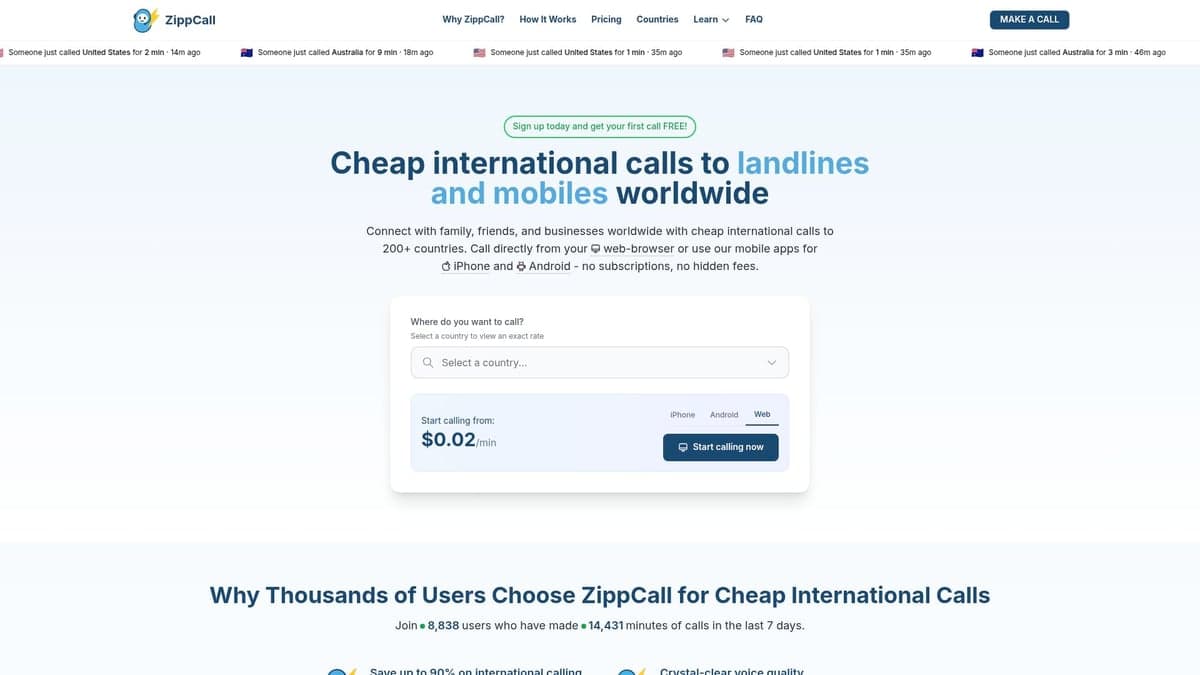
With ZippCall, there’s no need to hunt for a voice-enabled eSIM or juggle multiple SIM cards. You can make calls to landlines and mobiles worldwide, right over your eSIM data connection—even if your plan is data-only.
Picture this: You’re traveling in Spain with an Airalo data eSIM. You need to call your bank back home, but they only accept calls to their landline number. Instead of searching for local SIM cards or paying expensive roaming fees, you simply open ZippCall, dial the number, and connect instantly. ZippCall bridges the gap, making eSIM international calling hassle-free.
Why travelers choose ZippCall:
- Call any phone number – Landlines and mobiles in 200+ countries, not just app-to-app
- Pay-as-you-go – Rates from $0.02/min, no contracts or hidden fees
- Works on any device – iPhone app, Android app, or any web browser
- Secure & private – Encrypted HD voice calls for peace of mind
- Credits never expire – Use them on this trip or the next
Download the app before your trip so it’s ready when you land, or simply open web.zippcall.com in any browser. Need to look up a country code before you dial? Check out our country codes directory for quick reference.
Pros and Cons: eSIM vs. Physical SIM vs. WiFi Calling
Choosing the right solution for eSIM international calling means weighing the unique strengths and weaknesses of eSIM, physical SIM, and WiFi/VoIP calling. Each option offers its own blend of convenience, flexibility, and reliability. Let’s break down how they stack up, so you can confidently build your 2026 toolkit for seamless global connectivity.
Comprehensive Comparison Table
Here’s a clear snapshot of how each option compares for international calling eSIM needs:
| Feature | eSIM | Physical SIM | WiFi/VoIP (ZippCall) |
|---|---|---|---|
| Convenience | Instant setup, no card swaps | Must buy and swap cards | Uses existing internet, no SIM needed |
| Cost | Varies, often cheaper for data | Can be lowest for local plans | Pay-per-minute, often lowest overall |
| Call Landlines/Mobiles | Only with voice plan (rare) | Yes | Yes (200+ countries) |
| Coverage | Growing globally | Universal | Anywhere with internet |
| Setup | Scan QR code | Insert SIM physically | Open browser or app |
| Flexibility | Multiple profiles | One SIM at a time | Use on any device |
| Security | Harder to lose/steal | Physical loss possible | Encrypted calls |
With international calling eSIM solutions, the right choice often comes down to your travel style and device preferences.
Advantages of eSIM for International Calling
eSIM technology is transforming the way we connect abroad. For eSIM international calling, the biggest perks include:
- No need for tiny SIM swaps or searching for local shops
- Store multiple carrier profiles—perfect for frequent flyers and digital nomads
- Instant activation and plan switching, even while moving between countries
- Enhanced security, since eSIMs are embedded and less prone to theft
- Rapid adoption worldwide, as eSIM adoption is on the rise thanks to travel and device compatibility
If you crave flexibility and minimal hassle, eSIM is leading the charge for international calling eSIM solutions.
Drawbacks of eSIM
Of course, eSIM has its own limitations:
- Not all devices and regions support eSIM yet
- Voice/SMS support is limited—most plans are data-only
- Some providers have complex setup or limited customer support
- Regional regulations may restrict activation in certain countries
Before committing, always check device compatibility and the fine print for eSIM international calling.
When Traditional SIM Still Wins
There are times when a physical SIM card is the smarter choice:
- Local SIMs often offer the best rates and coverage in specific countries
- Remote or less-developed regions may lack eSIM support
- Some countries enforce strict regulations on eSIM activation
If you’re planning to stay longer in one country, grabbing a local SIM might still be the most cost-effective option for international calling eSIM needs.
WiFi Calling: The Flexible Alternative
WiFi calling apps and services fill the gaps where eSIM and traditional SIM solutions fall short. With services like ZippCall, you can make reliable international calls over any internet connection—no SIM required.
- Ideal in places with weak cellular coverage but strong WiFi
- Great for managing calls across devices
- Enhanced privacy and security with encrypted services
- Perfect complement to data-only eSIMs
Explore our WiFi calling international guide to see how you can combine eSIM data and VoIP apps for the ultimate eSIM international calling flexibility.
Making the Best Choice for Your 2026 Toolkit
Your perfect international calling eSIM setup depends on your travel patterns, device, and budget. We recommend pairing eSIM data with a calling service like ZippCall—giving you global reach, maximum flexibility, and peace of mind for every trip.
Frequently Asked Questions
Can I make regular phone calls with a data-only eSIM?
Not directly. Data-only eSIMs don’t include voice minutes or a phone number. However, you can use your eSIM data connection with a service like ZippCall to call any landline or mobile number worldwide.
Which eSIM providers offer voice calling?
Truphone and Ubigi offer voice-enabled plans in select countries, but they’re pricier and have limited coverage. Most popular providers like Airalo and GigSky are data-only.
Is eSIM international calling cheaper than roaming?
Usually, yes. Data-only eSIMs paired with VoIP services are typically 50-90% cheaper than carrier roaming rates. Compare specific rates for your destination at zippcall.com/countries.
Can I use eSIM and keep my regular SIM active?
Yes! Most modern phones support dual SIM (eSIM + physical SIM). You can keep your home number active for receiving calls while using eSIM data abroad.
What if I need to receive SMS verification codes while traveling?
This is tricky with data-only eSIMs since they don’t receive SMS. Options include: keeping your home SIM active for SMS, using a voice-enabled eSIM, or setting up SMS forwarding before you travel.
Ready to put your new eSIM knowledge into action? With the right setup, you can travel, work, or connect with loved ones anywhere—no more SIM swaps or surprise fees. Pair your data-only eSIM with ZippCall for complete calling flexibility.
Download now: iPhone | Android | Web Browser

Entrepreneur and founder of ZippCall. After years living abroad, Josh built ZippCall to make international calling simple, affordable, and reliable.
Ready to Try ZippCall?
Make affordable international calls on web, iPhone, and Android devices. Crystal-clear quality with competitive rates.
1 minute setup. No subscription required.
You might also like

Wifi Calling International Guide: Everything You Need to Know 2026
Discover wifi calling international in our friendly 2026 guide Learn how it works costs setup tips and how we can save together on global calls today
Read article
Smarty International Calls Guide: Everything You Need to Know 2025
Master smarty international calls with our 2025 guide. Learn about rates, setup, tips, and savings so we can connect globally with ease and confidence together.
Read article
International Calls MTN Guide: Everything You Need to Know 2025
Discover everything about international calls MTN in 2025 with our friendly guide. Learn rates, dialing tips, bundles, and smart ways to save money together.
Read article