


Traveling the world is exciting, but nothing ruins the adventure faster than coming home to a massive phone bill. International roaming charges can sneak up on us, making it tough to stay connected without breaking the bank.
In 2025, the need for affordable, seamless global connectivity is more important than ever. Whether you’re a digital nomad, a business traveler, or on a family vacation, having reliable service wherever you go is essential for safety and convenience.
Choosing the best international phone plans means you can save money, enjoy clear calls, and keep your mobile life running smoothly, no matter where your journey takes you.
In this guide, we’ll reveal the top 7 best international phone plans for travelers in 2025. We’ll cover pricing, features, pros and cons, and ideal use cases—making it easy for you to pick the perfect plan.
You’ll also get a quick overview of each provider’s costs, flexibility, roaming capabilities, and unique perks, so you can travel smarter and stay connected worldwide.
Why International Phone Plans Matter for Travelers
Traveling the world is exciting, but using your phone abroad can quickly become stressful and expensive. Understanding why the best international phone plans are essential will help you avoid surprises, stay connected, and make the most of your adventures.
The True Cost of International Roaming
Many travelers have faced steep roaming fees, often paying $10 or more per day just to use their phones abroad. Overages add up fast, with some reporting hundreds of dollars in unexpected charges after a trip. Stories of bill shock are common, showing why researching the best international phone plans before departure is so important. Even a few days of casual use can result in surprising expenses.
The Need for Seamless Global Connectivity
Staying connected while traveling is about more than social media. Navigation, emergencies, and keeping in touch with loved ones all require reliable service. Business travelers, digital nomads, and tourists each have unique needs, but all benefit from the best international phone plans. With remote work on the rise, dependable global access has become a must for many of us.
Benefits of Dedicated International Plans
Choosing a dedicated plan means predictable bills and better cost control. These plans often offer higher call quality, faster data speeds, and features like local numbers or unlimited texting. With the best international phone plans, you can enjoy perks designed for travelers, such as free incoming calls or special travel discounts, making staying connected both easy and affordable.
Key Considerations for 2025
As we look to 2025, 5G and eSIM technology are changing the travel landscape. Coverage is expanding into more remote destinations, giving travelers more flexibility. Security and privacy are growing concerns, so it is important to pick a plan that protects your data. To learn more about how eSIM and 5G are shaping mobile connectivity, check out eSIM and 5G synergy for travelers.
Key Features to Look for in International Phone Plans
Choosing the best international phone plans is about more than just finding the lowest price. Every traveler has unique needs, and the right plan can make your journey smoother, safer, and more affordable. Let’s break down the key features you should check before committing.
Pricing Structure and Transparency
With the best international phone plans, clear pricing is essential. Some providers offer pay-as-you-go, others have monthly subscriptions, and a few bundle travel packages for specific trips. Always look for upfront costs with no hidden fees.
Here’s a quick comparison:
| Provider | Pay-as-you-go | Monthly Plan | Bundled Package |
|---|---|---|---|
| ZippCall | Yes | No | No |
| Google Fi | No | Yes | No |
| Airalo | Yes | No | Yes |
Check per-minute and per-GB charges to see what fits your travel style. For Google’s specific offerings, see our Google international phone plan guide.
Coverage and Supported Countries
The best international phone plans cover a wide range of countries, but not all are truly global. Some focus on popular destinations, while others reach 200+ countries. If you’re heading off the beaten path, double-check the list of supported countries.
Regional plans might be cheaper, but global options offer flexibility for multi-country trips. Coverage in remote areas is improving, so always check the latest provider maps. Coverage in remote areas is improving, so always check the latest provider maps before your trip.
Data Allowances and Speed
Data is the lifeblood of modern travel. The best international phone plans typically offer data caps such as 5GB, 10GB, or even unlimited options. Be aware of 4G and 5G availability, as well as any throttling policies after reaching your data limit.
User reviews often highlight real-world speeds, which can vary depending on the country and network congestion. Prioritize plans with consistent, high-speed data for streaming, navigation, and sharing moments.
Flexibility and Ease of Activation
Travelers love plans that are easy to start and stop. Many of the best international phone plans now support eSIM, letting you activate service instantly without swapping physical SIM cards. This is especially helpful for last-minute travel or frequent flyers.
If you want to learn more about how eSIM and 5G are transforming travel connectivity, check out eSIM adoption and 5G expansion in 2025. Flexible plans should also let you pause, top up, or modify while abroad.
Roaming and Local Number Options
Some of the best international phone plans include free or discounted roaming in select countries. Others let you add temporary local numbers or support dual-SIM setups. Features like free incoming calls or texts can be a lifesaver, especially if you’re staying in one country for a while.
Dual-SIM and eSIM support make it easy to separate work and personal calls, or to keep your home number active while using a local plan.
Customer Support and App Experience
Great support makes a world of difference. Look for plans with 24/7 multilingual support, just in case you need help across time zones.
- Responsive mobile apps for managing your plan
- Usage tracking and easy top-up features
- Clear, user-friendly dashboards
A smooth app experience ensures you can relax and focus on your travels.
Security and Privacy
Travelers need peace of mind when connecting abroad. The best international phone plans include encrypted calls and strong data protection policies. Secure calling features help protect your information, especially when using public Wi-Fi.
Always review how your provider handles your data, so you can stay safe and connected wherever you go.
Top 7 Best International Phone Plans for Travelers 2025
Traveling in 2025 no longer means choosing between staying connected and saving money. The best international phone plans offer a perfect blend of affordability, flexibility, and global reach. Whether you’re a digital nomad, a frequent flyer, or planning your first overseas adventure, this list reveals the top 7 options that make global communication easy and stress-free. Let’s dive in and explore what makes each plan stand out for travelers like us.
ZippCall
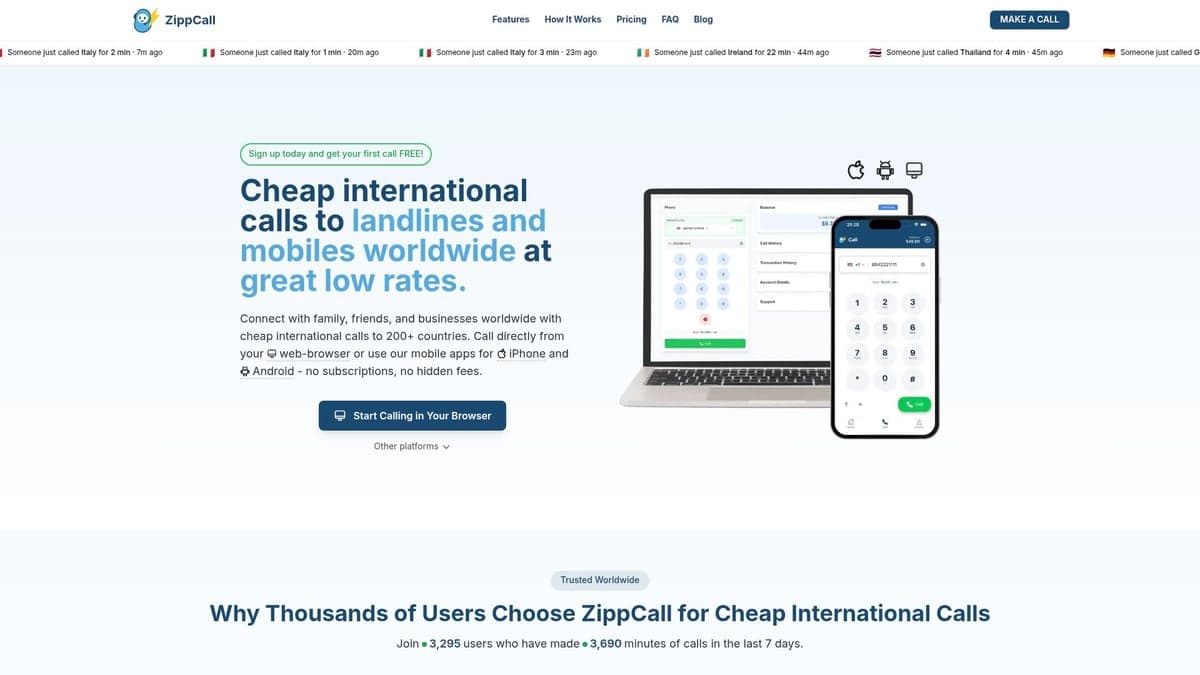
ZippCall is a standout among the best international phone plans for those who prioritize simplicity and savings. This pay-as-you-go service lets you call any landline or mobile in over 200 countries, all from their app or web platform. With rates starting at just $0.02 per minute, no monthly fees, and credits that never expire, ZippCall eliminates the stress of hidden charges or long-term commitments.
- Minimum $5 top-up, no expiration on credits
- Encrypted HD voice calls for privacy
- Multi-device support and instant setup
ZippCall is ideal for travelers, remote workers, and expats who want to avoid hefty roaming fees and only pay for what they use. The service doesn’t include data or SMS, so it’s best for those who mainly need calling. Need a deeper comparison? Check out this Best affordable international call services guide for more insights on calling options. For flexible, commitment-free international calls, ZippCall is hard to beat.
Google Fi Wireless
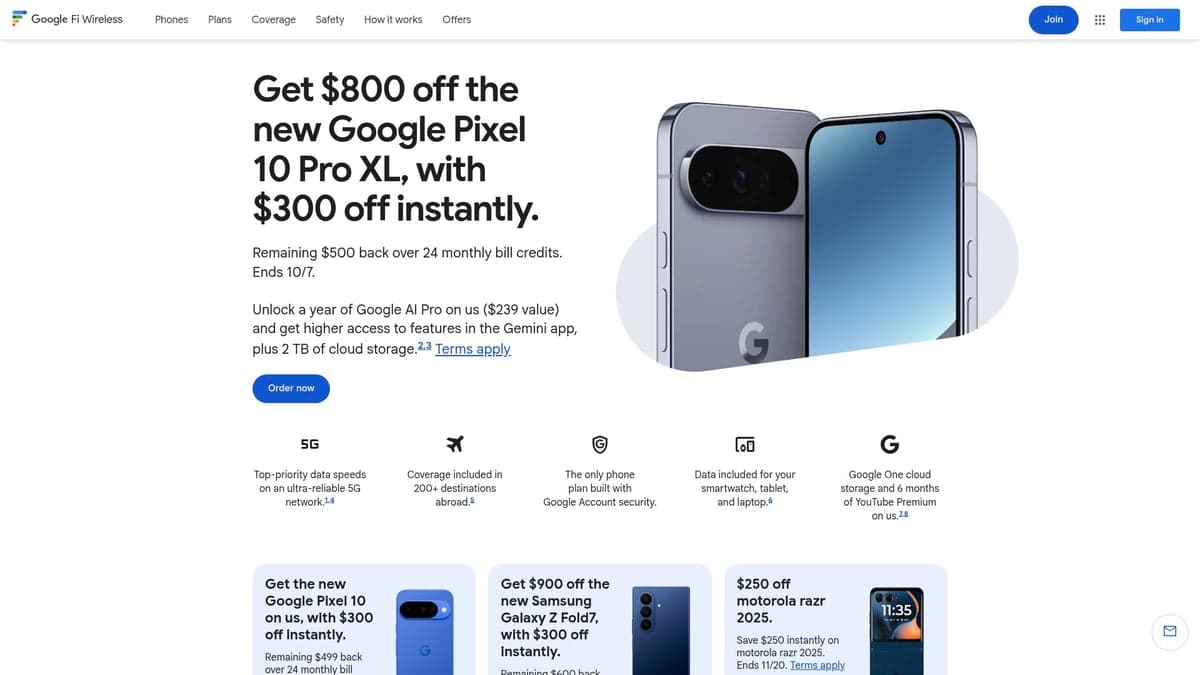
Google Fi Wireless is a favorite in the best international phone plans category for its flexibility and consistent coverage. The Flexible plan starts at $20 per month plus $10 per GB, while Unlimited Plus offers extensive data for $65 per month. Both options provide coverage in over 200 destinations, making it easy to use your regular number abroad.
- Seamless network switching, eSIM support
- Unlimited texts and affordable international calls
- Hotspot tethering for extra convenience
This plan suits frequent travelers, digital nomads, and those who rely on strong US and international service. While Google Fi offers transparent pricing and no contracts, heavy data users might find costs add up. Still, for tech-savvy travelers needing reliable, high-speed data and easy activation, it’s a top choice among the best international phone plans.
T-Mobile Magenta MAX
T-Mobile Magenta MAX ranks high among the best international phone plans for power travelers and families. At $85 per month (taxes and fees included), you get unlimited data and texts in 215+ countries, plus 5GB of high-speed international data.
- In-flight Wi-Fi and Netflix included
- Scam Shield protection for safer communication
- Truly unlimited global data with no roaming charges
This plan is perfect for business professionals and families who want premium extras and peace of mind abroad. While the monthly cost is higher, the perks—like in-flight Wi-Fi—make it worthwhile for those who travel often. After 5GB, speeds may be reduced, but you’ll never face surprise bills. For all-in-one convenience, it’s among the best international phone plans available.
Airalo eSIM
Airalo eSIM is revolutionizing the best international phone plans with instant, contract-free data in over 190 countries. Plans start at $5 for 1GB (7 days) and go up to $89 for 20GB (180 days), offering unmatched flexibility for both short and long trips.
- No physical SIM needed, instant eSIM activation
- Wide selection of regional and global data plans
- Compatible with eSIM-enabled, unlocked devices
Airalo is perfect for tech-savvy travelers and digital nomads who need data on the go. While it’s data-only (no calls or SMS), you can pair it with calling apps for complete connectivity. If you need fast setup and affordable data wherever you land, Airalo is a fantastic addition to the best international phone plans for 2025.
BOSS Revolution
BOSS Revolution is a trusted name among the best international phone plans for affordable calling to 190+ countries. With pay-as-you-go rates up to $1 per minute, optional $5/month for discounts, and free app-to-app calls and texts, it’s a flexible option for those with loved ones abroad.

- No contracts, easy top-up process
- Free calls between BOSS Revolution users
- Multilingual customer support
This plan is ideal for immigrants, expats, and travelers making frequent calls to specific countries. Per-minute charges can add up, so it’s best for occasional or targeted calls. For straightforward, app-based international calling, BOSS Revolution earns its spot among the best international phone plans.
AT&T International Day Pass
AT&T International Day Pass is a convenient add-on for existing AT&T users who want their regular number to work seamlessly abroad. For $10 a day, you get unlimited talk, text, and data in 210+ countries, paying only for days you use the service.
- Automatic activation, no SIM swapping needed
- Unlimited usage with your current plan features
- Predictable daily cost, no separate contracts
This plan is best for AT&T customers, business travelers, and those on short trips. While daily fees can add up for extended stays, the ease of use and unlimited access make it a solid choice among the best international phone plans for those who value convenience.
LycaMobile
LycaMobile rounds out our list of the best international phone plans with its variety of prepaid options and broad coverage. Plans start at $19 per month, with pay-as-you-go rates up to $1.25 per minute and international bundles for added savings.
- No contract, easy online top-up
- Multilingual support for global users
- Flexible add-ons for data, calls, and texts
LycaMobile is perfect for budget-conscious travelers, students, and those needing short-term or pay-as-you-go flexibility. Data speeds may vary, and best rates apply to select countries, but for no-commitment international calling, it’s a practical and user-friendly choice in the best international phone plans market.
How to Choose the Right International Phone Plan for Your Needs
Choosing the best international phone plans for your travels can feel overwhelming, but a little planning makes all the difference. Start by thinking about how often you travel, where you go, and how long you typically stay. These details shape what you truly need from your plan.
Next, check your device compatibility. Does your phone support eSIM? Many of the best international phone plans now offer instant eSIM activation, which can make switching between regions a breeze. For the latest on how eSIMs are reshaping global connectivity, you can explore this insightful guide on eSIM trends and global adoption in 2025.
When comparing plans, review:
- Data, voice, and text needs: Are you streaming, video calling, or just sending texts?
- Upfront costs vs. pay-as-you-go: Decide if you prefer predictable bills or flexible spending.
- Customer support: Is 24/7 help available if you run into issues abroad?
- Hidden fees: Always read the fine print for unexpected charges or taxes.
- User reviews: Real-world feedback helps highlight reliability and app experience.
If you’re an iPhone user, you might also benefit from checking out this international calls on iPhone guide for extra tips.
Picture this: a digital nomad hopping between countries might need flexible data and easy plan switching, while a family on vacation may care more about cost and emergency support. Matching your priorities to the right plan ensures you get the most value from the best international phone plans on the market.
Tips for Maximizing Value from Your International Phone Plan
Making the most of the best international phone plans starts before you even leave home. Preparation is key, and a little planning goes a long way in saving money and avoiding stress.
Here are our top tips to maximize your international plan:
- Activate and test your plan before you depart. This ensures you have coverage in your destination and prevents last-minute surprises.
- Rely on Wi-Fi when possible. Save your data allowance for when you really need it by using Wi-Fi for calls, streaming, and maps.
- Take advantage of free app-to-app calling and texting. Many of the best international phone plans support services like making international calls online, letting you stay in touch without extra fees.
- Monitor your usage regularly. Provider apps make it easy to track data and minutes so you never run out unexpectedly.
- Combine local SIMs or eSIMs with your global plan. This can unlock even more savings and coverage. Learn how eSIMs and 5G technology in 2025 give travelers flexibility and speed.
- Leverage customer support when needed. Quick help can make a world of difference if issues arise during your trip.
- Watch for seasonal promos and deals. Providers often run special offers during peak travel periods.
For example, you might use Airalo for affordable data and ZippCall for flexible voice calls. By following these tips, you can unlock the full value of the best international phone plans and focus on making memories, not worrying about your phone bill.
We all know how stressful it can be to stay connected while traveling, especially with high roaming fees and confusing plan options. That’s why finding the right international phone plan is so important for peace of mind and keeping in touch with loved ones or colleagues abroad. If you’re ready to say goodbye to surprise charges and enjoy simple, pay as you go calling in over 200 countries, we’ve got you covered. Let’s make your next adventure smoother and more connected—no contracts or complicated setups, just easy, affordable calls whenever you need them. Ready to give it a try? Start Calling

Entrepreneur and founder of ZippCall. After years living abroad, Josh built ZippCall to make international calling simple, affordable, and reliable.
Ready to Try ZippCall?
Make affordable international calls on web, iPhone, and Android devices. Crystal-clear quality with competitive rates.
1 minute setup. No subscription required.