

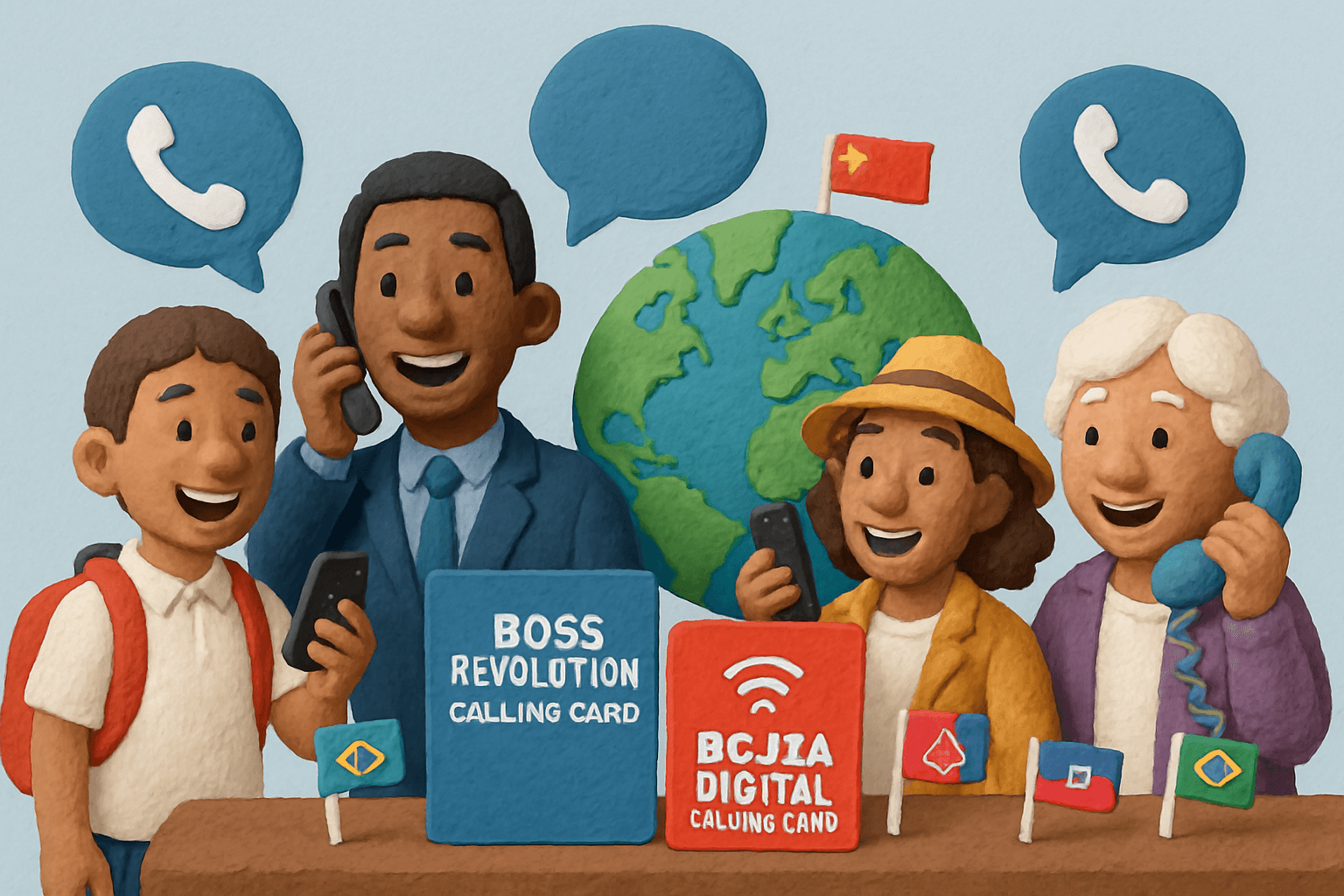
In 2026, staying connected across borders still matters — especially when international calls are the only reliable way to reach family, businesses, or landlines abroad. Boss Revolution has long been one of the most widely used prepaid calling services, particularly among people who want predictable costs without contracts.
This guide takes a practical, experience-based look at how Boss Revolution actually works today. We’ll cover how calling through the app and access numbers really feels, how pricing and top-ups behave in practice, where things get confusing, and who the service still makes sense for — based on real use, not marketing claims.
TL;DR
- Boss Revolution still works reliably for international calls in 2026, especially to landlines
- The prepaid model keeps costs predictable, but pricing isn’t always clear upfront
- The app gets the job done but feels dated and cluttered
- Payments and top-ups can be frustrating when things go wrong
- Best suited to regular callers who value familiarity over polish
What is Boss Revolution?
Boss Revolution is an international calling service that lets you call abroad either through its mobile app or by calling local access numbers from your phone. You prepay credit, use it when you need it, and there are no contracts or monthly commitments.
In practical terms, it’s built for people who still need real phone calls — not just WhatsApp or FaceTime — whether that’s calling family overseas, contacting businesses, or reaching people abroad who don’t reliably use internet-based apps.
Boss Revolution is operated by IDT, a long-established US telecom company, and has been around long enough that many users discovered it years ago and simply never stopped using it. It’s not flashy, but it’s familiar, widely supported, and generally does what it says on the tin.
How Boss Revolution works
- You add prepaid credit to your account
- You make calls either:
- through the Boss Revolution mobile app, or
- by dialling a local access number from your phone
- Call costs are deducted from your balance as you go
There’s no subscription to remember to cancel, and no surprise bill at the end of the month — once your balance runs out, calls stop.
Using the Boss Revolution app
Boss Revolution have mobile apps for both iOS and Android. I downloaded the Boss Revolution iOS app to see what the experience is actually like if you’re starting from scratch and just want to make a call.
At a high level, the basics are simple enough. You create an account, add some prepaid credit, and you can start calling. That’s what their website claims and even says ‘Sign up quickly’, so in theory, you can be up and running pretty quickly.
Signing up (rougher than it should be)
The sign-up flow, however, wasn’t as smooth as I expected.
To create an account, you’re asked to enter your mobile number and receive a verification code. The first time I tried this, I got a “Server is not responding. Please try again later.” error, which was frustrating straight out of the gate. I had to fully close the app and start again to get past it.
Once the code finally worked, the app briefly showed one screen before immediately covering it with a prompt asking me to sync my contacts. It felt abrupt and not especially polished. I was then asked to enter my name — but the keyboard wouldn’t type into the field, and a few seconds later the keyboard disappeared entirely with no way to bring it back. At that point, I had to force-close the app again and reopen it.
On the second restart, the app skipped the name step completely and just loaded me straight into the home screen, which felt a bit… random. That said, I was credited with £2 of free calling credit on signup, which is a nice touch and genuinely useful for testing the service.
Overall, nothing here was a deal-breaker, but it didn’t feel slick or confidence-inspiring for a first-time user.
Making a call
Making a call through the app itself is straightforward. You can dial a number manually or choose a contact, and the app shows you the per-minute rate before you connect.
I placed a test call to a US number (+1) 804-222-1111. The app quoted me £0.05 per minute, which immediately raised an eyebrow — because earlier in the app I’d seen pricing shown in USD, with a rate of $0.01 per minute for the same destination.
I signed up using a UK mobile number, so the app defaults to showing prices in GBP, but switching between currencies — without clearly explaining why — feels confusing and a bit misleading. As a user, you’re left wondering which rate actually applies and why it changed.
I assume this is tied to how Boss Revolution uses your existing mobile number as your caller ID, rather than offering public outbound numbers with different pricing. Other services handle this differently, sometimes allowing you to trade caller ID familiarity for better rates — but Boss Revolution doesn’t really explain this distinction in the app.
That said, I made a test call that lasted just over three minutes, and call quality was good. The connection was clear, with no noticeable echo or dropouts during the call.
The app experience (where opinions will differ)
This is where Boss Revolution starts to feel more divisive.
The app does the job, but it’s clearly trying to be more than just an international calling app. Alongside the core calling features, there are sections for news, radio stations from different countries, and trending content. Personally, this felt unnecessary.
When I open a calling app, I’m usually trying to call someone — not read the news or listen to radio streams. What made this more noticeable is that some of this content is actively pushed at you, even after a call ends.
None of this breaks the app, and you can mostly ignore it, but it does add clutter. If you like minimal apps that do one thing well, this will probably feel distracting. If you don’t mind it, you’ll likely just scroll past and get on with what you came for.
Managing balance and topping up
Checking your balance and viewing call rates is easy enough. You can see how much credit you have left and look up destination pricing, which helps avoid running out mid-call.
Topping up, however, was another slightly frustrating moment. I added £5 of credit and was surprised to find that Apple Pay wasn’t available, despite using an iPhone. Instead, I had to manually enter my card details — and the app didn’t even offer iOS autofill — so I had to go and physically get my card.
The payment flow itself was simple enough once I entered the details, but after submitting the payment I got an error saying:
Your transaction was declined. Please contact customer service.
Despite that message, I instantly received a notification from my bank confirming that £5 had been charged successfully. At that point, my card had been debited, but the credit hadn’t appeared in my Boss Revolution balance — which is exactly the kind of situation you don’t want in a prepaid calling app. It does mean I can test their customer service though so I will report how that went later!
Bottom line on the app
If you want a simple, no-nonsense way to make international calls, the Boss Revolution app does work. Calls connect, quality is solid, and the prepaid model keeps costs predictable.
That said, the overall experience feels dated and occasionally clunky. The app seems to have grown over time by adding features, rather than being refined around a clean, focused calling experience. Small issues on signup, confusing rate presentation, unnecessary content, and rough edges in the payment flow all add friction that shouldn’t really be there in 2026.
For long-time users who value familiarity and reliability over polish, that may not matter much. But if you’re looking for something modern, minimal, and friction-free, this is one area where Boss Revolution can feel a step behind.
Other ways to top up and call with Boss Revolution
Although the mobile app is clearly the primary way Boss Revolution wants you to use the service today, it isn’t the only option. There are a few alternative ways to add credit and make calls – though some are easier to understand than others.
Access numbers (old-school, still available)
Boss Revolution does still offer local access numbers, which let you place international calls by dialling a local number first, rather than calling directly through the app. This can be useful if you’re calling from a basic phone, have unreliable mobile data, or simply prefer not to use apps.
That said, access numbers aren’t especially easy to find. They don’t appear to be promoted inside the app at all, and I could only find them by digging around on the website. It’s also not entirely clear whether access numbers are available in every country, though most major ones appear to be covered.
Boss Revolution also notes that some access numbers may incur local network surcharges, depending on your carrier. And even surcharges depending on the number you are calling. That immediately adds a layer of complexity — and unless you know exactly how your mobile provider bills those numbers, it’s easy to end up paying more than you expect.
I didn’t test calls via access numbers myself, but based on how they’re presented (and how little they’re surfaced in the app), they feel more like a legacy option than something Boss Revolution actively wants new users to rely on. If you can comfortably use the app, that’s almost certainly the simpler route.
Buying a Boss Revolution phone card
Boss Revolution also still sells prepaid phone cards, which you can buy from certain retailers and then redeem as credit in your account. Once redeemed, the credit works the same way as if you’d topped up directly in the app.
This option makes sense if you prefer paying cash, don’t want to use a card online, or are buying credit for someone else. But for most users with a smartphone and a bank card, it’s probably not the most convenient way to top up.
Again, this feels like something Boss Revolution keeps around for specific use cases, rather than a core part of the experience they’re pushing today.
Subscription plans and “savings” options
In addition to pay-as-you-go credit, Boss Revolution also offers subscription-style plans. These generally fall into two categories:
- Unlimited plans, which allow unlimited calls to specific destinations
- Savings plans, where you pay a small monthly fee (for example, $5/month) in exchange for discounted per-minute rates to certain countries
These plans can make sense if you regularly call the same destination and already know your usage patterns. If you’re calling one country every day, an unlimited or discounted plan could work out cheaper than pure pay-as-you-go.
That said, the way these plans are presented can feel confusing. It’s not always obvious which destinations are included, how savings compare to standard rates, or whether a plan genuinely makes sense unless you sit down and do the maths. For casual or infrequent callers, the simplicity of prepaid credit is often easier to reason about.
Bottom line on alternatives
Boss Revolution gives you plenty of ways to call and pay — app-based calling, access numbers, phone cards, and subscription plans — but not all of them are equally straightforward.
If you want the least friction and the clearest experience, the mobile app with prepaid credit is the simplest option. Access numbers, cards, and plans can all make sense in specific situations, but they come with trade-offs and extra complexity that aren’t always well explained upfront.
As with most things in telecoms, the “best” option really depends on how often you call, who you’re calling, and how much effort you’re willing to put into optimising the setup.
Customer service (quick to respond, but not reassuring)
I had a genuine reason to contact Boss Revolution customer support: I topped up £5 in the app, got a message saying the payment had failed — but my bank showed the £5 had definitely been taken.
I used their live chat and, to be fair, I was connected to an agent almost instantly. There was no waiting around, and replies came back quickly, which is more than you can say for a lot of telecom apps.
The problem was what they told me.
After verifying my phone number and the last four digits of my card, the agent explained that the transaction had “failed due to missing information” on my account — information that was never flagged during sign-up or before I was allowed to attempt the top-up. Despite this, the card was still charged.
I was told the money had been “reversed” and would return to my bank within 5–7 business days, and that to avoid this happening again I’d need to manually provide:
- My full name exactly as it appears on my card
- My card billing address
When I pushed back — asking what information was missing and why the app didn’t catch this before charging my card — the response was essentially a repeat of the same instructions, without much explanation.
At that point, I decided not to continue. I asked for a refund and made it clear I wouldn’t be using the app further. The agent confirmed the refund (again, with the same 5–7 business day window).
The support itself is fast and accessible, which is a plus. But the experience didn’t feel reassuring or well-handled. Being charged after being told a payment failed, then asked for extra details only after the fact, doesn’t inspire much confidence — especially in a prepaid service where trust around payments really matters.
If everything works smoothly, you may never need to contact support. But if something does go wrong, be prepared for explanations that feel a bit vague and resolutions that take time, even when the issue clearly isn’t your fault.
Pricing: what’s cheap, what’s confusing
On the surface, Boss Revolution often looks very cheap. You’ll see low per-minute rates advertised for popular destinations, and in isolation those numbers can be genuinely competitive. The prepaid model also helps keep costs predictable — you won’t accidentally run up a huge bill, because once your balance runs out, calls stop.
Where things get confusing is how those prices are actually applied. Rates can change depending on the country you’re calling from, the caller ID being used, and even the currency shown in the app. In my case, I saw prices displayed in both USD and GBP for the same destination, with little explanation as to why. That makes it harder than it should be to understand what you’re really paying per minute unless you’re paying close attention.
If you’re a regular caller to the same destination and willing to dig into the details, Boss Revolution can still work out cheap — especially with their savings or unlimited plans. But for casual users, or anyone who values clear, upfront pricing without having to think about caller ID, currencies, or edge cases, the pricing experience can feel more opaque than it needs to be.
Who Boss Revolution is (and isn’t) a good fit
Boss Revolution makes the most sense for people who already know how they call and who they call. If you regularly phone the same country, don’t mind prepaid credit, and care more about reliability than polish, it can still be a solid option. It’s especially practical if you need to call landlines or basic mobile phones, or you’re supporting family members who don’t use internet-based calling apps.
It’s also a reasonable fit if you’re comfortable spending a bit of time figuring things out — whether that’s understanding which rates apply to you, choosing a subscription plan, or working around some of the app’s rough edges. Long-time users in particular may find there’s little reason to switch if the service already does what they need.
Where Boss Revolution is likely to frustrate people is if you expect a clean, modern app experience with minimal setup and zero friction. If you want transparent pricing, seamless payments, and an interface that stays out of your way, the combination of cluttered features, occasional bugs, and confusing rate presentation may feel dated. For casual callers or anyone who just wants things to “just work,” that trade-off is worth keeping in mind before committing.
Boss Revolution vs newer calling apps
Boss Revolution has roots in a world before ubiquitous internet calling, and that history shows in both strengths and limitations. Its core offering — prepaid international calling with a predictable balance — is something many newer apps have tried to match. But when it comes to overall experience, expectations in 2026 look very different from what Boss Revolution prioritises.
Most modern calling apps today emphasise simplicity and clarity above all else. They typically:
- Handle payments with one-touch options like Apple Pay or Google Pay
- Offer transparent, single-currency pricing
- Let you call or text with a minimal interface that stays focused on the task
In contrast, Boss Revolution still clings to a hybrid user experience. The prepaid model is familiar and dependable, but it also means juggling balance, in-app top-ups, and sometimes unclear rates based on caller ID and currency. The presence of extra content in the app, legacy access number options, and mixed pricing cues can make the experience feel less streamlined compared to newer services designed from the ground up for mobile.
That isn’t to say Boss Revolution doesn’t compete — it does, and it still connects calls reliably, especially to landlines and basic phones that some newer apps struggle with. But if your priority is effortless calling with transparent pricing and a minimal user interface, apps built for the post-smartphone era often feel more intuitive and friction-free.
Final verdict: is Boss Revolution still worth it in 2026?
Boss Revolution still does what it has always done: it lets you make international calls reliably, using prepaid credit, without contracts or surprise bills. For people who call the same countries regularly, need to reach landlines or basic mobile phones, and don’t mind a bit of setup friction, it can still be a perfectly workable option in 2026.
That said, it’s hard to ignore how dated parts of the experience feel. The app lacks polish, payments can be frustrating, pricing isn’t always as clear as it should be, and there’s a lot of unnecessary clutter for something most people just want to open and call from. None of these issues alone are fatal — but together, they make Boss Revolution feel like a product that’s standing still while expectations have moved on.
If you’re already using Boss Revolution and it meets your needs, there’s no urgent reason to switch. But if you’re choosing a service for the first time, or you value simplicity, transparency, and a modern mobile experience, it’s worth looking at newer alternatives before committing. Boss Revolution still works — it just no longer feels like the obvious choice it once was.
Frequently Asked Questions
Is Boss Revolution still good for international calls in 2026?
Yes — it still works reliably for international calls, especially if you regularly call the same destinations or need to reach landlines. That said, the app and payment experience feel dated compared to newer alternatives.
Do you have to use the Boss Revolution app to make calls?
No. You can make calls either through the app or by using local access numbers. In practice, the app is the easiest option, and access numbers feel more like a legacy feature.
Are Boss Revolution’s rates really cheap?
They can be, but pricing isn’t always straightforward. Rates vary by destination, currency, and how the call is placed, which can make it harder to understand what you’re actually paying per minute unless you look closely.
Does Boss Revolution offer unlimited calling plans?
Yes. Boss Revolution offers both unlimited plans and “savings” plans for specific destinations. These can make sense if you call the same country frequently, but they require a bit of homework to see if they’re actually worth it.
Can you top up using Apple Pay or Google Pay?
At the time of testing, Apple Pay wasn’t available on iOS, and topping up required manually entering card details. This may change, but it’s worth being aware that the payment experience isn’t as smooth as many modern apps.
What is Boss Revolution customer support like?
Live chat support is fast and easy to reach. However, when issues do occur — especially around payments — explanations can feel vague and resolutions may take several business days, which isn’t ideal for a prepaid service.
Boss Revolution still has a place in 2026 — especially for people who value prepaid calling, need to reach landlines, and are happy with a more traditional setup. It remains widely used for a reason, and if it already works for you, there’s no urgent need to change.
That said, if you’re looking for a simpler, more modern experience — especially one with clearer pricing and fewer moving parts — it’s worth considering newer alternatives. For example, ZippCall offers a similar pay-as-you-go model but lets you make international calls directly from your web browser, without installing an app. We’ve put together a detailed comparison here.
Disclosure: This site is run by the team behind ZippCall. We’ve aimed to keep this guide factual and experience-based so you can decide what’s right for you.

Entrepreneur and founder of ZippCall. After years living abroad, Josh built ZippCall to make international calling simple, affordable, and reliable.
Ready to Try ZippCall?
Make affordable international calls on web, iPhone, and Android devices. Crystal-clear quality with competitive rates.
1 minute setup. No subscription required.
You might also like

The Ultimate Guide to International Call Fees (2026)
Understand international call fees in 2026. Compare providers, learn how charges work, and discover ways to save money.
Read article
Rebtel: The Complete Guide to International Calling, Rates & Features (2026)
The ultimate guide to Rebtel in 2026. Learn about Rebtel rates, local call features, setup, pricing plans, and how it compares to alternatives for affordable international calling.
Read article
International Calling Cards: The Complete Guide (2026)
The ultimate guide to international calling cards in 2026. Compare the best prepaid phone cards, cheap calling cards, and online options. Find rates, avoid hidden fees, and save on global calls.
Read article